TTDHOSTT 198
Highline Hospitality Acquires Pittsburgh-Area Courtyard by Marriott
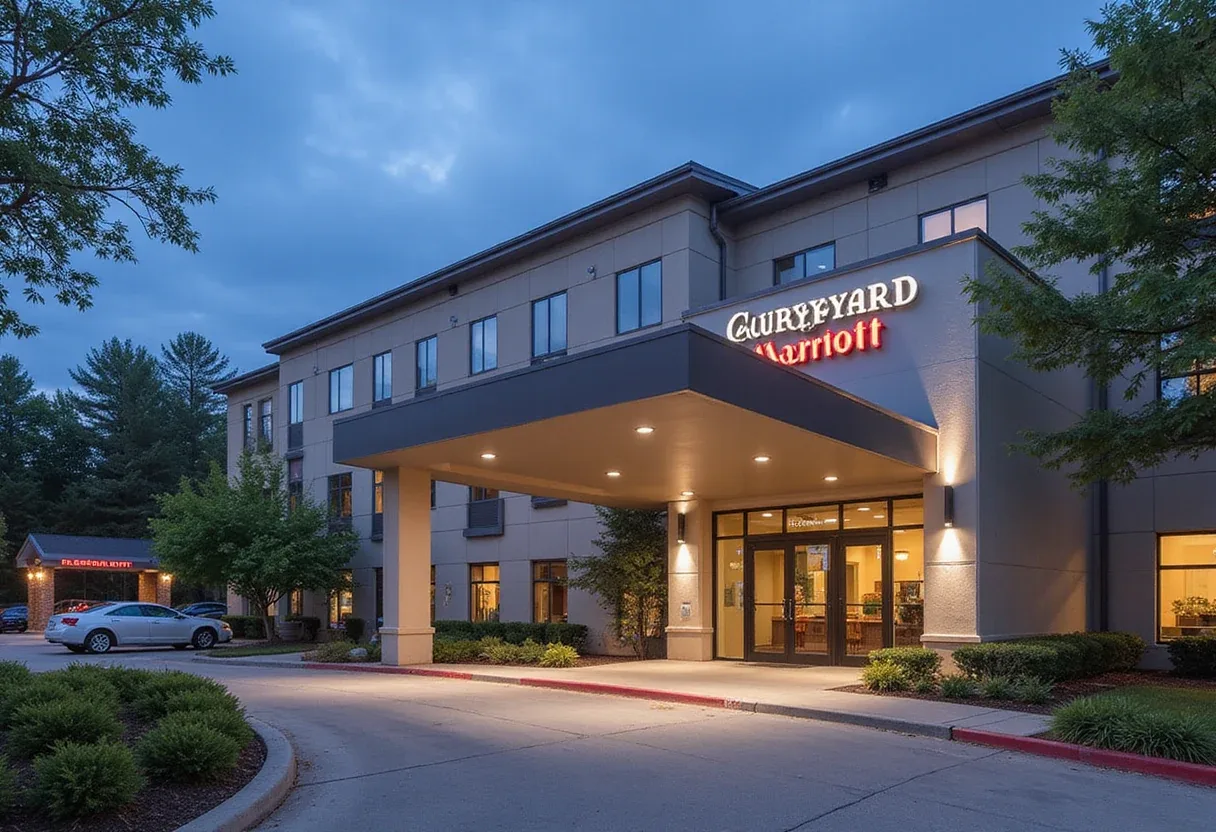
Highline Hospitality Partners has acquired the Courtyard by Marriott Pittsburgh North/Cranberry Woods. The branded select-service property keeps its Marriott Bonvoy flag, leaving travel sellers' booking flows and revenue pipelines intact.
Itinerary
- Highline Hospitality Partners acquired the Courtyard by Marriott Pittsburgh North/Cranberry Woods in Cranberry Township, north of Pittsburgh.
- The property continues to operate under the Courtyard flag inside Marriott's Bonvoy distribution system.
- Cranberry Township sits at the junction of I-79 and the Pennsylvania Turnpike.
- Pittsburgh's suburban hotel nodes have outpaced the urban core on RevPAR over recent quarters.
- A new ownership typically triggers a soft-goods refresh in year one and a casegoods refresh in years two or three.
By Sophie Lindqvist
Highline Hospitality Partners has acquired the Courtyard by Marriott Pittsburgh North/Cranberry Woods, adding a branded select-service (limited-service plus meeting space) property in Cranberry Township to its portfolio.
The hotel, located roughly 25 miles north of downtown Pittsburgh, will keep operating under the Courtyard flag and remain inside Marriott's Bonvoy distribution system. For sellers of travel, that means no break in connectivity — same central reservation, same loyalty pricing, same agent booking flow. Inventory doesn't shift when ownership does.
Highline, a hospitality acquisition firm focused on branded select-service assets, steps into a submarket where suburban nodes have generally outpaced the urban core on RevPAR (revenue per available room) over recent years. That's the metric operators benchmark to measure pricing power, and the corridor's thin new-supply pipeline is what underpins it.
What changes for Marriott?
Effectively nothing at the brand layer. Courtyard runs on a franchise model: Marriott keeps the franchise fees, the loyalty program and the brand standards. The royalty stream flows through Marriott Bonvoy to travel agents and corporate bookers exactly as before. Marriott keeps the fee revenue, sellers of travel keep the same booking path.
What changes for the property?
A new owner typically signals a renovation cycle, and the industry pattern is well established. Soft-goods refresh — that's carpet, bedding and soft seating — comes in year one, followed by casegoods (furniture, fixtures, casework) in years two or three. That work can briefly compress sellable inventory as rooms rotate out of service, which revenue managers handle through rate fences (cutoff dates and minimum-stay rules that protect availability) and group block management. Cranberry's competing set is aging, so a refreshed product tends to pick up an ADR (average daily rate) premium once it returns to the sellable block.
Why Cranberry, and why now?
Cranberry's demand mix leans on corporate and group rather than convention-led tourism. Its location at the junction of I-79 and the Pennsylvania Turnpike makes it a default overnight stop for traffic between Pittsburgh, Erie and the northern industrial corridor. That geography has supported more stable occupancy (the share of rooms sold) than convention-dependent submarkets through the post-pandemic normalization, which is part of why private buyers are paying attention.
The submarket's new-construction pipeline has been thin for years, which protects the asset's pricing power. For Highline, that scarcity is the trade.
What sellers of travel should watch
The transition will likely be invisible at the distribution layer, and that's the headline for revenue managers and travel agents. The bigger signal sits with Highline's capital strategy: if the firm follows the playbook of similar private buyers, expect a soft renovation in year one, a casegoods refresh later, and a brief inventory compression as rooms drop out of the sellable block.
For now, bookings flow unchanged. The trade is a change of owner, not a change of product.
via Google News: Hotel investment (Source)
More from Sophie Lindqvist
Show full bio
Senior reporter covering people, launches and day-to-day practice in Tourism industry coverage for trade professionals at Travel Trade Desk.
392 articles
Also boarding · Related articles
- HIG16:10
Highline Hospitality Partners Buys Courtyard Pittsburgh North
- HIG14:05
Highline Hospitality Partners Acquires Pittsburgh Courtyard by Marriott
- KNI03:04
Knightstone Buys Courtyard in New York, Extending U.S. Push
- APA03:04
Apartments by Marriott Sets First U.S. Branded Residential in Orlando
- DUA02:54
Dual-Brand Hilton, Marriott Franchisee Files Chapter 11 in New Jersey