TTDOTATT 218
Certares Puts $2.3 Billion Into European Rail, Eyes Eurostar Rival
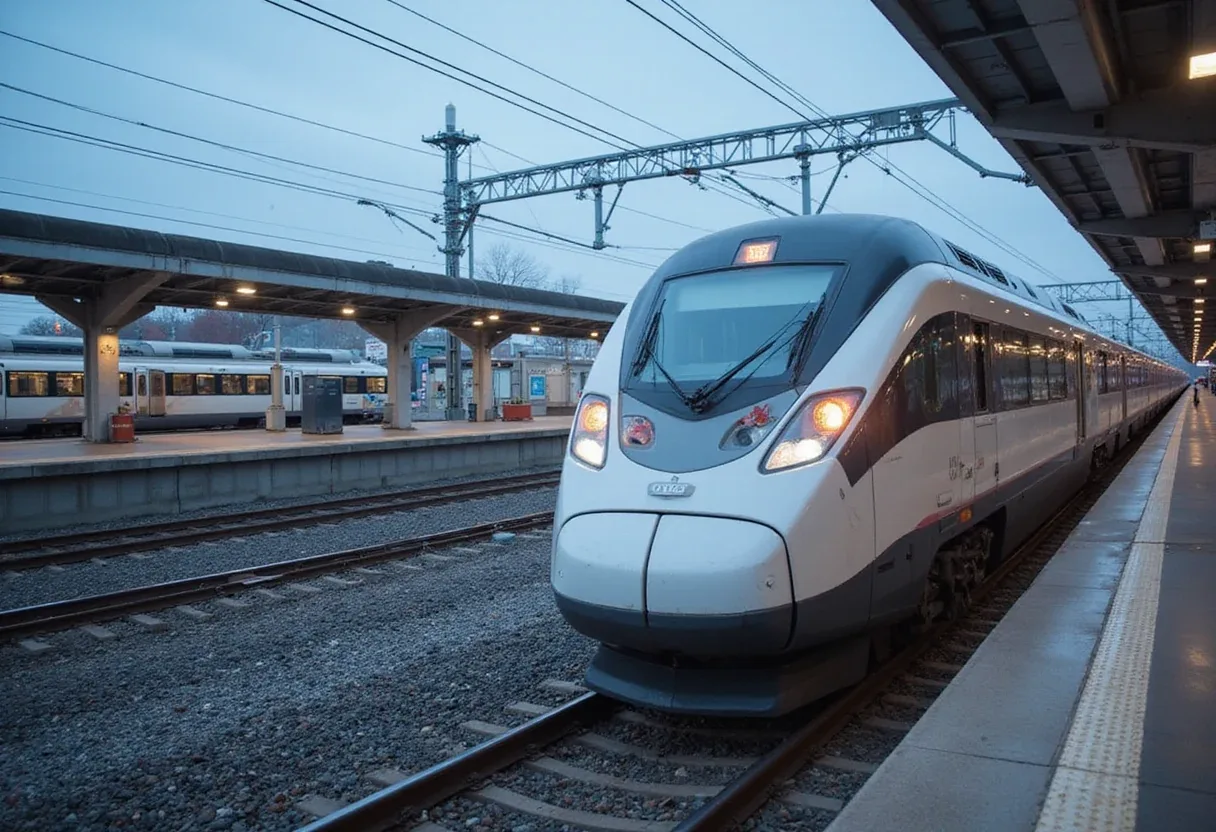
Private equity firm Certares has invested about $2.3 billion in European and UK rail, building a French challenger to SNCF alongside Ferrovie dello Stato and a London-Paris rival to Eurostar, founder Greg O'Hara said.
Itinerary
- Certares has invested about $2.3 billion in European and UK rail, founder Greg O'Hara said Thursday at the Skift Transatlantic Summit in Dublin.
- A French law already bans domestic flights when a direct train trip covers the same route in under 2.5 hours, with some connecting services excepted.
- Certares' partner for the French build is Ferrovie dello Stato, parent of Trenitalia, with new train sets ordered to challenge Eurostar on London-Paris.
- O'Hara named Germany, Greece and Spain as markets under active review, called Poland the continent's standout outside the western economies, and ruled out the Nordics.
- Palazzo Fiuggi, Certares' flagship thermal-springs hotel outside Rome, was up 32% year over year.
Private equity firm Certares has invested about $2.3 billion in European and UK rail, building a challenger to state-owned SNCF (France's national railway) alongside Italy's Ferrovie dello Stato. Founder Greg O'Hara unveiled the wager Thursday at the Skift Transatlantic Summit in Dublin, betting that policy-driven demand will soon write itself.
His thesis hangs on one French rule. A French law already bars domestic flights when a direct train trip covers the same route in under 2.5 hours, with some connecting services excepted.
"So we like trains because France has passed a law, and other European countries are going to pass a law that if it's within a certain distance, you can't fly there anymore," O'Hara said via video from Hitachi's Italian offices. He lives in Milan.
Who is Certares actually racing?
The plan runs both ends of the Channel. Build a French high-speed operator that challenges SNCF, and order new train sets aimed at Eurostar (the channel-tunnel operator) on the London-Paris line.
"The plan is we own the challenger railway to SNCF in high-speed rail in France," O'Hara told attendees.
Not a small name on the cap table (the investor roster in a deal). Ferrovie dello Stato, parent of Trenitalia, runs a large high-speed network across Italy and brings operating muscle money alone can't rent.
Where could the next check go?
O'Hara named Germany, Greece and Spain as markets under active review. He tagged Poland as the continent's standout outside the western economies.
"Poland is the superstar," he said, citing scale and consumer momentum. Ireland drew a quieter nod. The Nordics did not — the markets are "small and behavior is niche," he added. In private equity, that usually means the check size doesn't clear the minimum-return hurdle.
Why is distribution the real problem?
Rail demand may be policy-elastic. Rail distribution is not. Operators have historically paid travel agents and OTAs (online travel agencies such as Expedia and Booking.com) little to nothing per ticket, so agents spent two decades ignoring rail.
"Selling a train ticket remains almost impossible" for an outside agent today, O'Hara said. That line should keep tour operators (firms assembling multi-supplier itineraries) and bedbanks (wholesale hotel inventory platforms) awake at night. Even a doubling of policy-driven demand helps no seller if commission economics stay stuck at near-zero.
The likely answer is parallel distribution: build a channel alongside the trains, the way hotel chains now run direct-booking campaigns to bypass OTAs. Agents either start earning rail commissions, or rail stays largely direct — and the market absorbs the price opacity elsewhere.
What are the bottlenecks?
O'Hara flagged two constraints that could throttle his thesis:
- High-speed track only matters if it actually reaches the destination.
- Train supply is the tighter squeeze. The order book for trains is worse than for planes, he noted — a comparison anyone who tried to lease aircraft in 2025 will find only mildly reassuring.
What is the wellness side bet?
Outside rail, Certares is quietly buying historic thermal-springs hotels across Europe as a wellness-and-longevity play.
Palazzo Fiuggi outside Rome, the firm's flagship, ran up 32% year over year per Certares. One property, one data point — but a useful signal for the wellness segment on the continent.
What should sellers watch?
For travel distributors, the live questions are narrow:
- Does the new French operator, partnered with Trenitalia, actually launch inventory agents can book alongside flights in one itinerary?
- Does rail commission economics get rewritten at all, or stay stuck at near-zero?
If O'Hara is right that two or three more European capitals follow Paris into short-haul flight bans, rail's distribution problem stops being a quirk and becomes the next chapter in how Europeans book ground transport. If he is wrong, Certares ends up owning a lot of very shiny trains — and travel agents keep being told to call the station.
via Skift (Source)
More from Daniel Okafor
Show full bio
Market editor covering technology and product news in Tourism industry coverage for trade professionals at Travel Trade Desk.
394 articles
Also boarding · Related articles
- VIR16:39
Virgin Targets Cross-Channel Rail With New Service Plans
- SKI02:50
Skift Transatlantic Summit Sets Dublin Date With Policy-Led Roster
- TWO02:54
Two strikes set to disrupt Belgium flights and trains
- WOR02:59
Worldchoice Sports Opens Direct Trade Booking Platform
- AIR18:59
Air Canada Adds Toulouse, and Travel Advisors Get a New France Seller